Types of food traceability help restaurants and other foodservice businesses monitor the origin, journey and use of food products.
This process makes it possible to follow products through the different stages of the food supply chain, contributing to safer and better-organised operations.
Traceability can be managed in different ways depending on the stage involved and the information that needs to be monitored. In this article, we explain the main types, how they work and which data should be recorded to maintain effective control over food products.
Food traceability concept
Food traceability is the rigorous control of each stage of production of a product.
In this way, each of the components and procedures used to obtain certain foods, the way in which they are distributed and how they are marketed are known.
With the use of food traceability, it is easy to establish the origin of food defects or any problems that have been generated in any of the processes.
With its implementation, the marketing of certain batches of products that may pose a threat to the health of the people who consume them is prevented and the quality of each food is guaranteed.
Types of food traceability
Depending on the business, there are three types of food traceability.
Each of them guarantees the detailed inspection you expect, in all the processes the food is subjected to
Internal
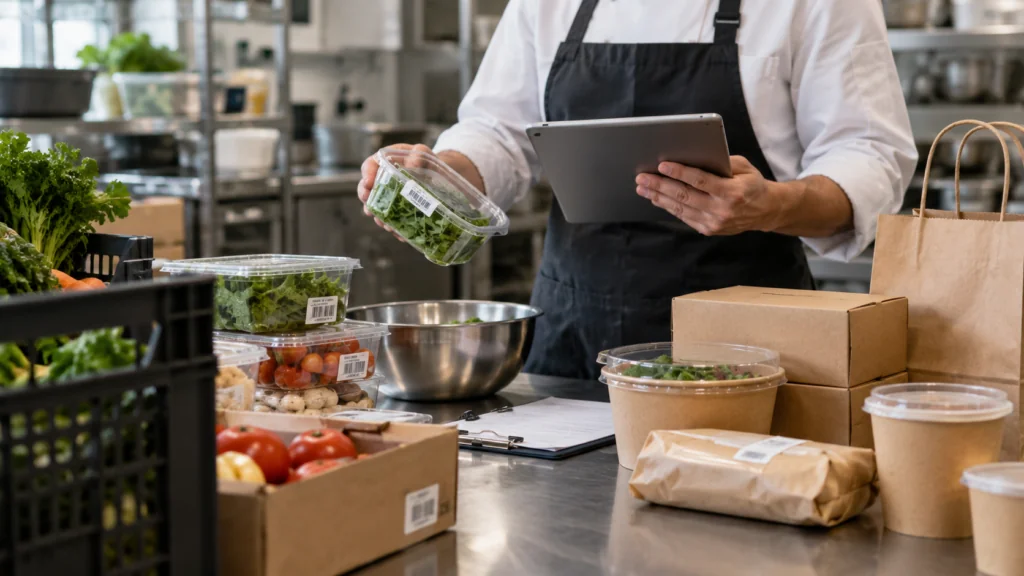
Internal traceability is carried out in the kitchen of each restaurant or in the food preparation companies.
In this type of procedure, a record is made of the food that has been obtained from the suppliers.
Once registered, the production of new products with these raw materials is started. At the end, a new control is made.
In this last control, it is specified which products from the first registration were used, the procedures to which they were subjected and which products were obtained.
Backwards
Another type is traceability backwards. This is dedicated to checking which products were dispatched to the restaurant and who the responsible suppliers are.
Back traceability requires invoices for the order, information on animal feeding and care, certification of non-GMO food and analysis of the food to confirm.
It is important that the invoices have: the name of the supplier, batch number of the products, place of origin and general details.
Forward
The forward type of traceability is carried out when food is produced for subsequent marketing in shops.
In addition to each of the production processes, strict control must be kept over the refrigeration and preservation of each batch of products.
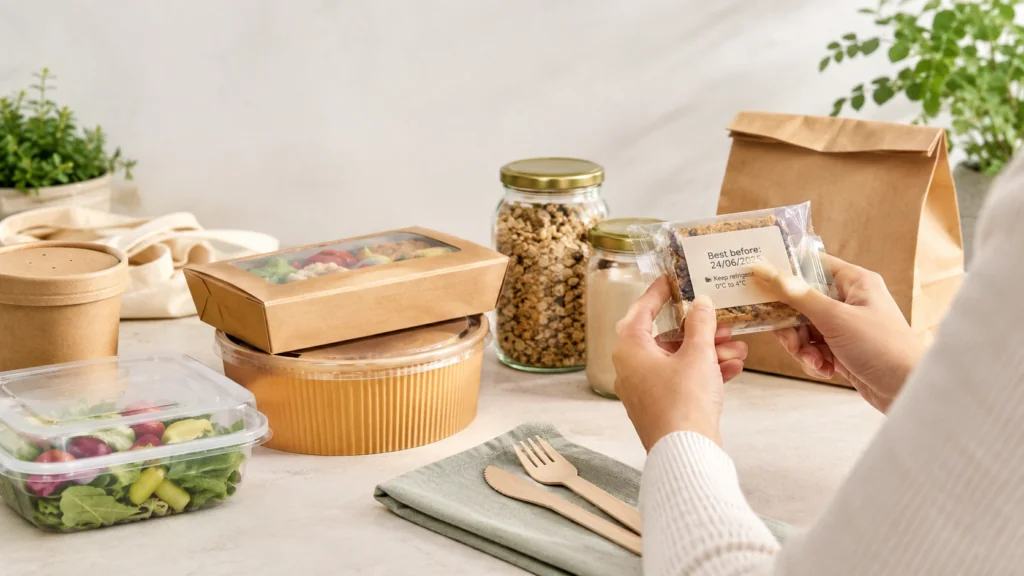
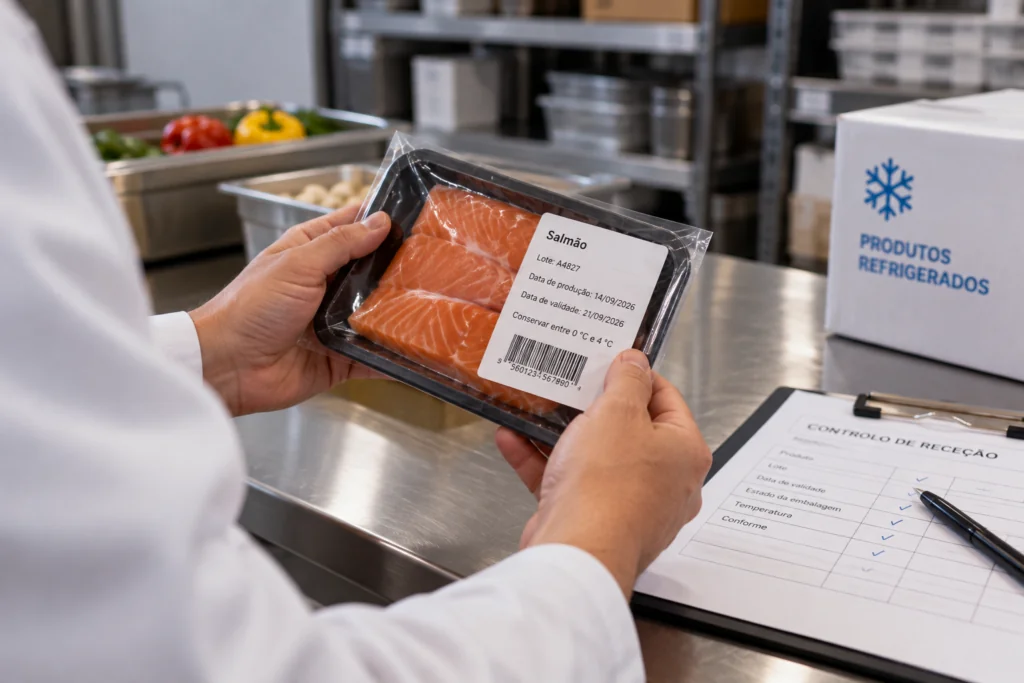
Data such as date of manufacture, expiry date, batch number and the destination to which the products were distributedmust be recorded on each package.
Thanks to this, it is possible to correct in time any shipment of products that do not meet the quality and safety standards of the restaurant or company.
What information guarantees traceability?
Thanks to food traceability, the production processes of each food product are meticulously checked. This makes it possible to have as much information as possible about the food.
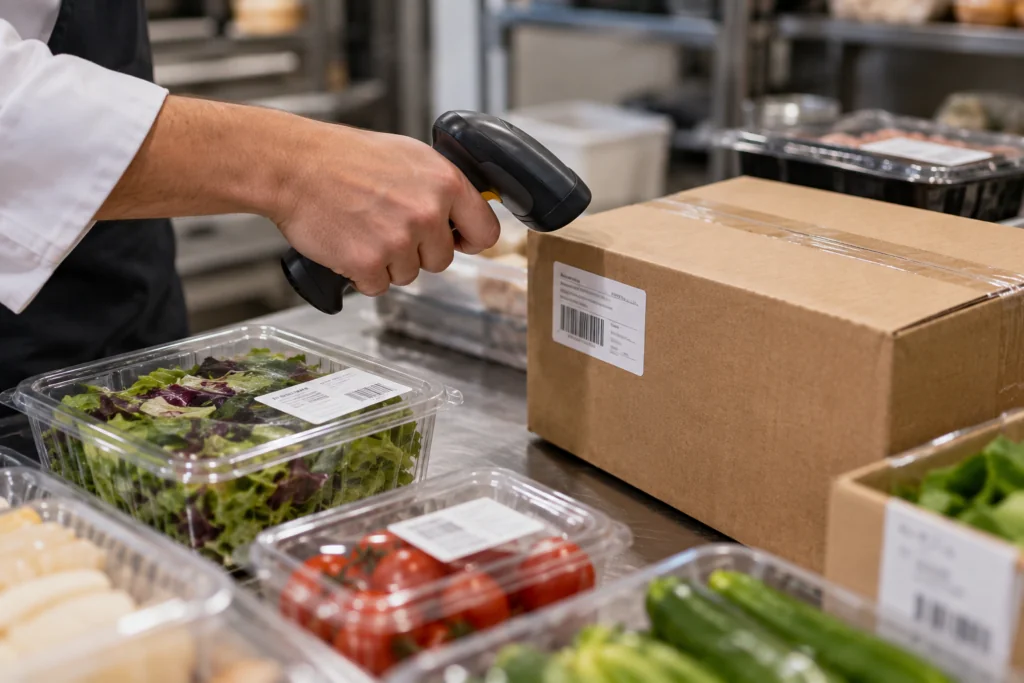
One of the first aspects is the registration of each product that is received and distributed. In the case of those that are received, the raw material from which the final products are made to be marketed.
It is also important to know who are the people in charge of delivering the products and who are responsible for the distribution to the marketing points in the shops.
Another relevant information in the management of food traceability is dates. In this case, dates of receipt or delivery of products.
Finally, other information such as batch number, production date and expiry date are of great help.
Clear product identification also makes day-to-day food control easier. For more practical guidance, learn how to label food in a restaurant to improve date management, stock organisation and food safety.
Who guarantees the types of food traceability
Several actors have to ensure compliance with the types of food traceability.
Each of them ensures compliance with food traceability with the stringent control that defines it, but at different scales.
European Union
Within the European Union, the legal framework for food traceability is established by Regulation (EC) No 178/2002. Article 18 requires traceability to be ensured at all stages of production, processing and distribution.
Food and feed business operators must also have systems and procedures in place to identify their suppliers and the businesses to which their products have been supplied, allowing this information to be made available to the competent authorities when required.
Status
In the case of the State, the main representative endorsing food traceability is the Ministry of Agriculture, Fisheries and Food.
The objective of this Ministry is to monitor the proper enforcement of food traceability.
Its action is based on the regulations put in place by the European Union and the laws of each country.
In the event that a company does not respect or does not use food traceability correctly, the Ministry of Agriculture, Fisheries and Food will monitor the establishments until they comply with food safety.
Supply chains
Finally, there are the supply chains. These chains are made up of each of the people who work in the process of making the products.
From farmers to truck drivers, they are responsible for food traceability in their area of competence, so that any problems that may arise can be quickly resolved.
What do you gain from the types of food traceability?
The application of food traceability has great advantages, which ensure an improvement in the quality of the service you offer.
This is because customers value the meticulous control and quality they get in each of the products you sell.
Transparency
The first advantage is that your restaurant is transparent and honest about every process in the supply chain.
By knowing the provenance and general details of the food, you can better manage how it will be used to make the products you serve in your restaurant.
Increase safety
Food traceability allows your restaurant to provide greater food safety.
If you have control over the date of preparation and expiry of each product, to use those that are free of risk of spoilage and claim the supplier if there are products from the batch in bad condition.
This will maintain the quality of the restaurant, avoid a bad experience for the diners and they will not be exposed to health problems.
Superior efficiency
When it comes to efficiency, food traceability is the best. Thanks to it, it is easy to keep track of the raw materials used in the restaurant on a daily basis.
If you notice that you are about to run out of a product, you can place a new order with the suppliers, without having to run out of any ingredient for your recipes.
Develop your logistics
Knowing every detail of the food thanks to food traceability allows you to have better control over storage logistics.
By knowing the food preservation process, you will know whether you should place the products in a fridge, store or freezer.
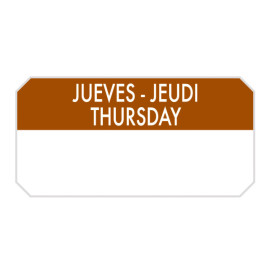
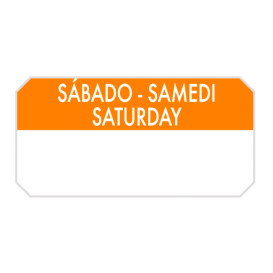
As for the expiry date, it will give you the information you need to sort the products according to the order in which they leave the store, placing those with the longest expiry date at the bottom.
Those closest to the expiry date are placed at the front to be used as soon as possible.


More confidence
Because it is a process that requires great care, people feel more confident about eating in your restaurant.
That confidence comes because food traceability shows that your restaurant takes care of every detail of the service. That will attract more and more customers and you will have an increase in sales.