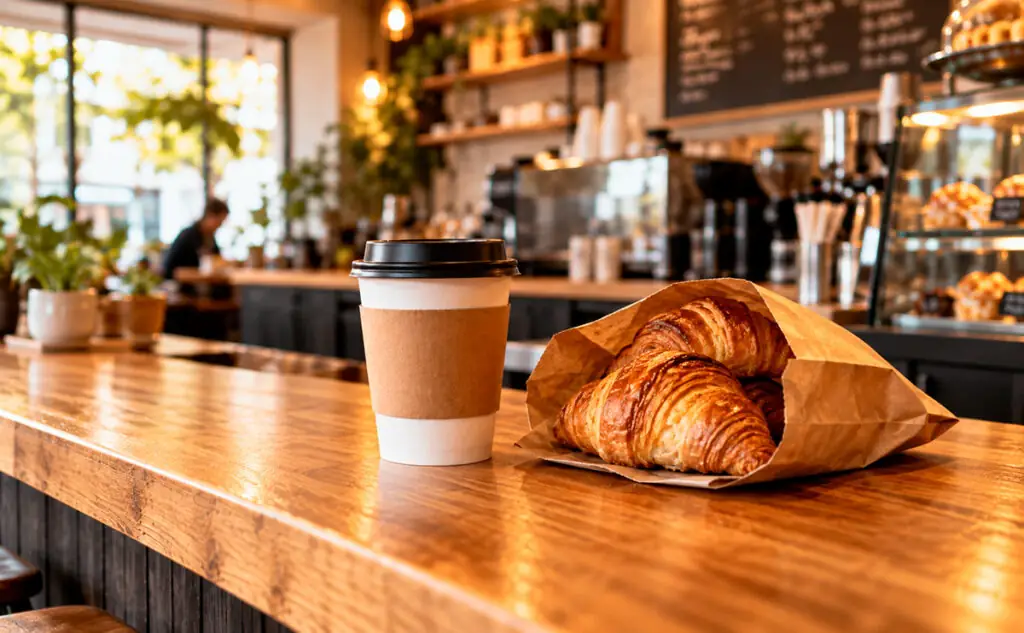
To mark International Coffee Day, it is worth looking at coffee from a different perspective: are you simply selling coffee, or are you making the most of every order?
Selling coffee is one thing. Making every coffee an opportunity to generate a higher-value sale is quite another.
If you run a café, bakery, bakery café or any hospitality business offering coffee to go, a significant proportion of your customers probably already know what they want when they walk through the door: order a coffee and get on with their day.
Knowing how to sell more takeaway coffee does not necessarily mean attracting more people or increasing the price of every drink. Often, the opportunity lies in encouraging existing customers to complete their order with something else, choose a higher-value option or enjoy such a convenient service that your business becomes part of their routine.
That is where average spend comes in.
Before selling more coffee, find out how much each order is worth
Your café’s average spend tells you how much each customer spends on average per purchase.
The calculation is simple:
Average spend = turnover / number of transactions
Imagine you serve 120 takeaway coffee orders during a morning. If you manage to increase the average value of each order by £0.80, that would represent an additional £96 in turnover that day, before taking associated costs into account.
You do not need to double your number of customers to achieve it.
That is why, when considering how to increase café sales, it is worth looking beyond the number of coffees served. What customers buy alongside their drinks, the alternatives you offer and how easy it is to add something else to the order also matter.
Coffee does not have to travel alone
A customer ordering a coffee has already made their first purchasing decision. That creates an opportunity for a second question: what else might they need or fancy with it?
This is where cross-selling comes in.
In a café, this can translate into very natural combinations:
- Coffee + croissant.
- Coffee + toast.
- Coffee + cookie.
- Coffee + pastry.
- Coffee + small sandwich.
- Coffee + savoury snack.
- Coffee + juice.
The aim is not to add products indiscriminately. The key is to offer something that suits the moment of consumption.
Early in the morning, a breakfast combination may work best. Mid-morning, customers may prefer something more substantial. In the afternoon, coffee and something sweet can be a natural pairing.
The more logical the suggestion feels, the less it comes across as an extra sale and the more it feels like a useful solution.
Turn combinations into easy choices
One way of increasing a café’s average spend is to reduce the number of decisions customers have to make.
Instead of waiting for them to build an order item by item, you can offer ready-made combinations:
Quick breakfast: coffee + pastry.
Mid-morning break: coffee + small sandwich.
Afternoon snack: coffee + cookie or slice of cake.
The objective is not to fill your menu with endless promotions. It is to identify which products naturally sell well together and turn them into easy-to-understand choices.
You can also create a small but noticeable difference between buying just a coffee and choosing a combination, so that the second option feels like better value.
There is another important point: calculate profitability before setting the price. A combo only makes sense if it increases the value of the order without unnecessarily sacrificing margin.
Cross-selling and upselling: two different ways to increase average spend
Although the terms are often used interchangeably, they are not quite the same.
Cross-selling means adding a complementary product.
For example: “Would you like a pastry with your coffee?”
Upselling, on the other hand, encourages the customer to choose a higher-value version of what they were already going to buy.
For example: “Would you like that in a large?”
Both strategies can work together in a café.
An order that originally consisted of one coffee could become a larger coffee accompanied by a pastry.
The important thing is that the alternatives make sense to the customer. Offering extras for the sake of it can feel intrusive; helping someone make a better choice can have the opposite effect.
Do not simply ask “Anything else?”
There is a big difference between leaving the entire decision to the customer and making a specific suggestion.
“Anything else?” is very easy to answer with “no”.
A specific recommendation immediately helps the customer picture the combination:
“Would you like a croissant with that?”
“We also have a breakfast deal with coffee and toast.”
“If there are several of you, we can prepare everything together to take away.”
Front-of-house staff play an important role here. There is no need to turn every order into a sales pitch: the team simply needs to know the offer well and understand which complementary products fit each situation.
Good suggestive selling in a café should make the decision easier, not slow the service down.
Design your coffee-to-go service around peak times
Takeaway coffee has one particular feature: many customers value speed above almost everything else.
During the morning rush, people heading to work, students, regulars and groups ordering several drinks can all arrive within a very short period.
A strategy to sell more takeaway coffee can quickly fail if every additional product makes the order significantly slower.
Before introducing ten new combinations, review the operation.
Are cups prepared and easy to access?
Is the correct lid clearly identified for every cup size?
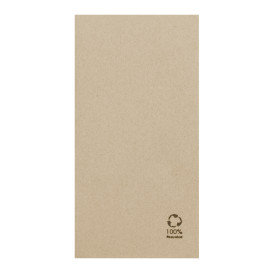
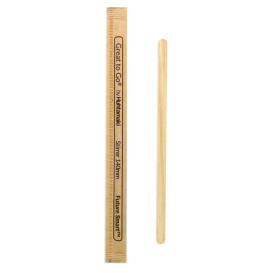
Are napkins, stirrers and other accessories organised?
Can the team prepare two, three or four drinks to take away without wasting time working out how to carry them?
Are pastries and complementary products well displayed and quick to serve?
Increasing average spend should not mean increasing the complexity of every order to the same extent.
The best combination is one that can also be prepared quickly and consistently.
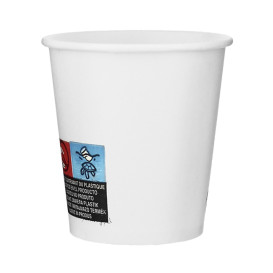
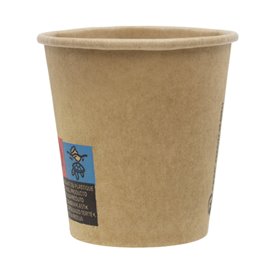
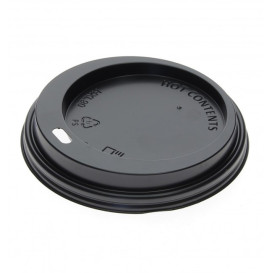
Offer sizes that suit different consumption occasions
Not every customer wants the same amount of coffee.
A quick espresso before work has very different requirements from a milky coffee someone will drink on the journey or once they reach the office.
Offering different takeaway coffee sizes can therefore help you cater for different needs while also creating natural upselling opportunities.
However, more choice does not always mean better results.
Too many sizes can complicate:
- cup stock;
- lid compatibility;
- counter organisation;
- the customer’s decision;
- staff workflows.
Analyse which sizes customers actually buy and build your offer around them.
Variety should answer a commercial need, not create an unnecessary number of stock lines and consumables.
Your counter can help you sell more
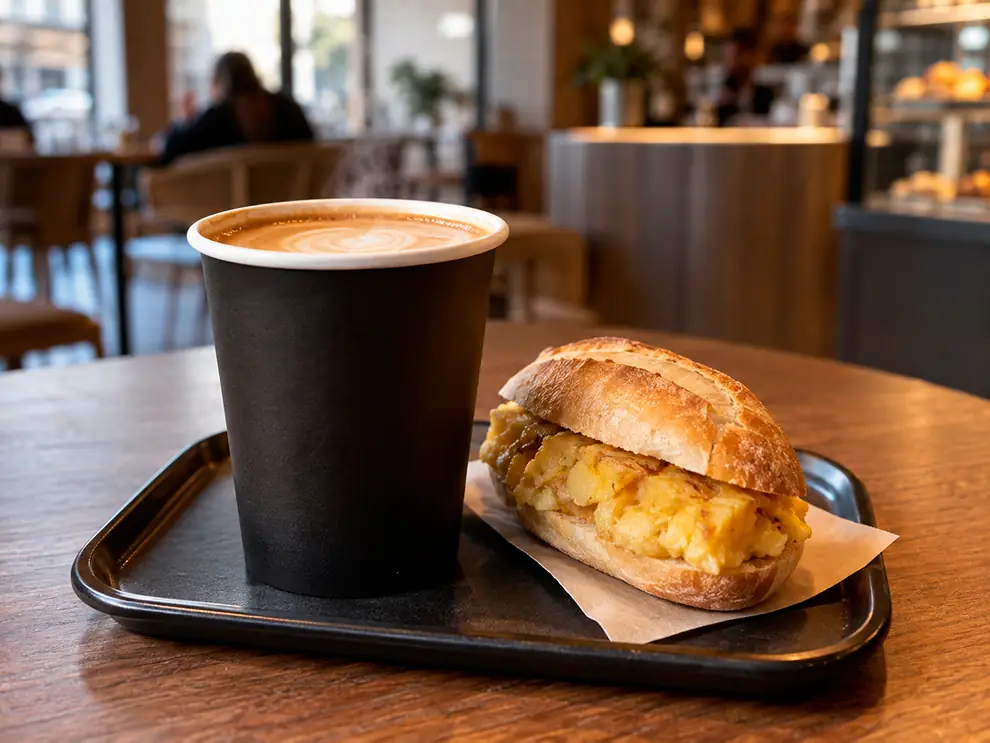
Customers ordering coffee to go usually spend very little time inside the premises. You therefore have only a few seconds to show them other options.
Product display becomes particularly important.
Pastries, cookies, small sandwiches and individual snacks are much easier to add to an order when they are clearly visible close to the point of purchase.
The display should create a simple association:
“If I’m taking the coffee with me, I could take this too.”
You can reinforce this with concise signage, featured combinations or products grouped according to the time of day.
In this context, your counter is more than somewhere to display food. It is also a sales tool.
Packaging can reinforce the value of takeaway coffee
When customers sit inside a café, their experience consists of many elements: the premises, the cup, lighting, music and service.
With takeaway orders, much of that context disappears.
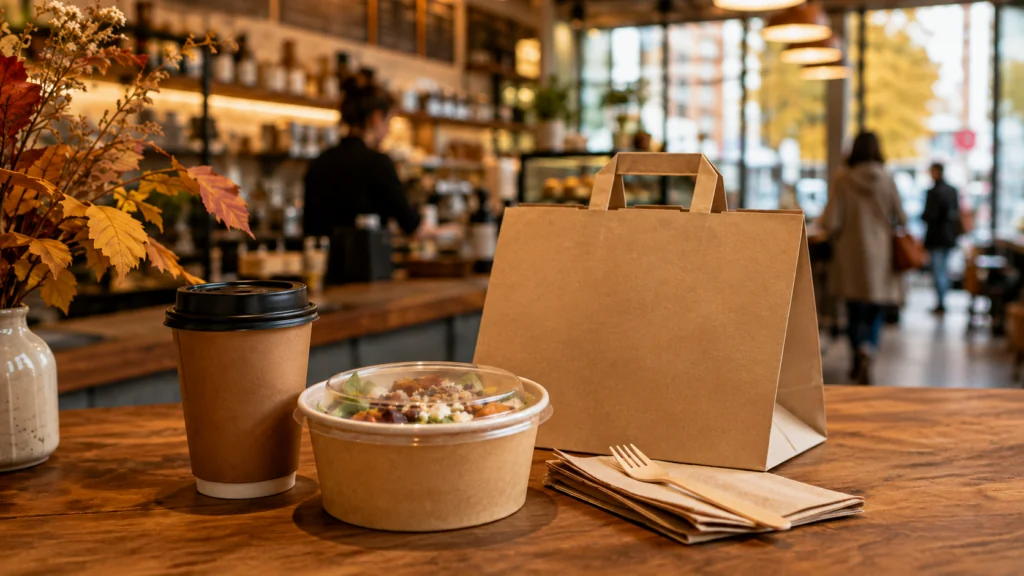
The takeaway coffee cup becomes far more important.
It will not turn bad coffee into good coffee, but it can affect how the drink is carried, handled and perceived.
When organising an effective takeaway coffee service, consider:
- The right capacity for each drink.
- Compatibility between cups and lids.
- Ease of handling.
- Comfort during transport.
- Presentation that matches the establishment.
- Cup carriers for multiple drinks.
- Napkins and other accessories needed to complete the order.
Appearance can also form part of the experience. A white, kraft, black or differently finished cup communicates different things and can better reflect the image a café wants to project.
Packaging therefore stops being simply the container the coffee leaves in and becomes one of the few physical elements of the café that accompanies the customer once they leave.
Make multiple-coffee orders easier
There is one particularly valuable type of coffee-to-go customer: someone who is not only buying for themselves.
One person may come in for three coffees for colleagues. An office may place a breakfast order. A customer may need several drinks for a meeting.
In these situations, convenience becomes even more important.
Carrying three or four individual cups does not create the same experience as receiving them properly organised in a suitable carrier.
Cardboard cup carriers, bags and an organised preparation process can make these orders easier and help businesses handle higher-value purchases without making transport difficult for the customer.
You do not need to offer a full catering service to take advantage of this opportunity. Sometimes it is enough to make ordering four coffees almost as easy as ordering one.


Think in consumption occasions, not only products
Another way to identify opportunities is to ask yourself when your customer buys coffee.
- Before work: Prioritise speed, convenience and easy-to-carry formats.
- At breakfast: Combinations with toast, pastries or juice take on greater importance.
- Mid-morning: Customers may be more receptive to a snack or savoury option.
- After lunch: The customer may only want coffee, but there may still be opportunities around size or small accompaniments.
- In the afternoon: Sweet products and pastries become more relevant.
Thinking about these moments allows you to create a much more useful offer than simply having a long list of coffees.
The question changes from “What else can we sell?” to “What does our customer need at this moment of the day?”
Make coming back easy
Selling more is not only about increasing the value of one transaction. It also means encouraging customers to buy their next coffee from you.
Coffee is particularly suited to repeat purchasing because it can form part of an everyday routine.
You can encourage repeat visits through:
- loyalty cards or schemes;
- rewards after a certain number of purchases;
- promotions linked to specific times of day;
- recurring breakfast deals;
- fast and predictable service;
- a consistent experience.
You do not always need to compete through discounts.
For many customers, knowing they can walk in, order their usual drink and leave quickly with a well-prepared coffee is already a strong reason to return.
Measure what actually increases average spend
Not every idea will work equally well in every business.
Before implementing changes, understand your starting point and then check what impact those changes have had.
Some simple indicators to review include:
- Overall average spend.
- Average spend on takeaway orders.
- Percentage of orders containing only coffee.
- Percentage of coffees sold with an accompaniment.
- Most popular combinations.
- Best-selling drink sizes.
- Products that perform best in cross-selling.
- Multi-drink orders.
- Results by time of day.
For example, you may discover that your breakfast combination performs extremely well between 8 am and 10 am but attracts very little demand afterwards.
Or perhaps one particular sweet product generates far more cross-selling than three others taking up more room on the counter.
Data allows you to simplify your offer and focus on what genuinely delivers results.
Mistakes that can stop you selling more takeaway coffee
Trying to increase sales without first reviewing your service can produce the opposite result.
- Creating too many options: An overly complex menu can slow down customer decisions and order preparation.
- Creating combos without calculating margin: Selling more is of little value if the promotion reduces profitability too far.
- Using sizes with very little turnover: Every extra format can mean additional cups, lids and storage space.
- Failing to train the team: If combinations exist but staff do not know about or recommend them, it will be difficult to benefit from them.
- Neglecting transport: Takeaway coffee needs to be genuinely easy to take away. Compatible lids, suitable cups and carriers for multiple drinks are all part of the service.
- Focusing only on attracting new customers: There may be more potential in slightly increasing the value or frequency of purchases from existing customers than in focusing all your efforts on attracting new ones.
Checklist: are you making the most of your takeaway coffee service?
Before launching new promotions, ask yourself:
- Do I know my café’s average spend?
- Do I know the average spend specifically for takeaway coffee?
- Do I offer products that naturally complement coffee?
- Have I created simple breakfast or afternoon combinations?
- Does my team know what products to recommend?
- Do the coffee sizes I offer have genuine demand?
- Are cups and lids properly organised?
- Can I prepare several takeaway coffees conveniently?
- Are complementary products clearly visible?
- Am I measuring which combinations work?
- Do I have a strategy to encourage repeat custom?
If several answers are no, there is probably still room for improvement.
Selling more coffee does not always mean serving more cups
When we think about increasing café sales, it is easy to focus only on attracting more customers.
But takeaway coffee gives you other levers to work with.
A well-designed combination can increase the value of an order. An appropriate size can create a natural upsell. Good organisation can help you serve peak periods more efficiently. And a convenient service can turn an occasional customer into someone who makes your café part of their routine.
The objective should therefore not simply be to sell more takeaway coffee, but to ensure that every order provides more value to both the customer and the business.
Coffee, accompaniments, presentation, speed and ease of transport all form part of the same experience.
When these pieces work together, a simple cup of coffee can become much more than a quick purchase: it can be the beginning of a larger order and, above all, the next visit.