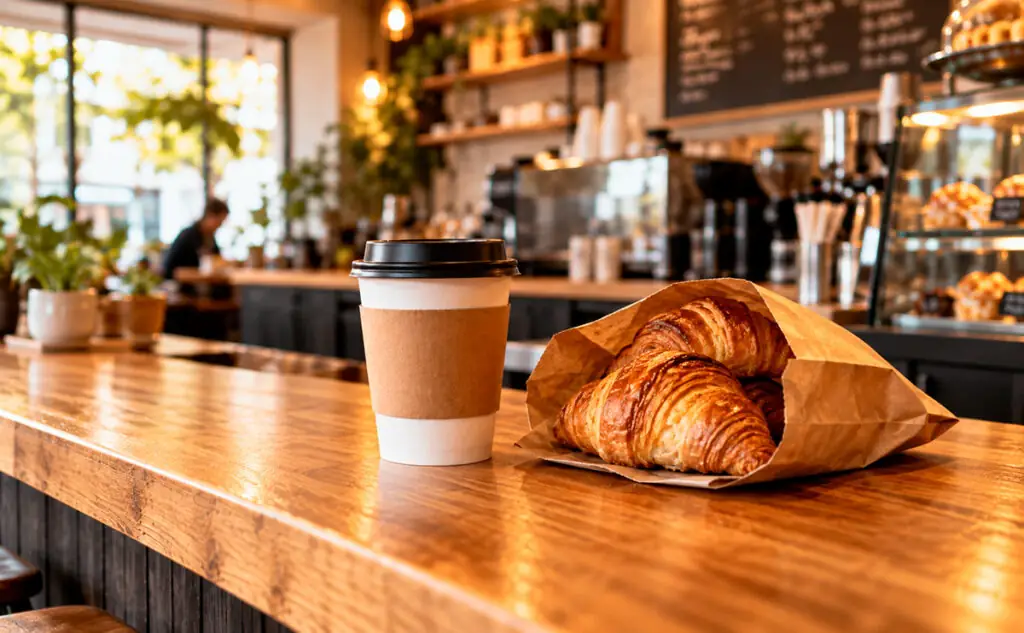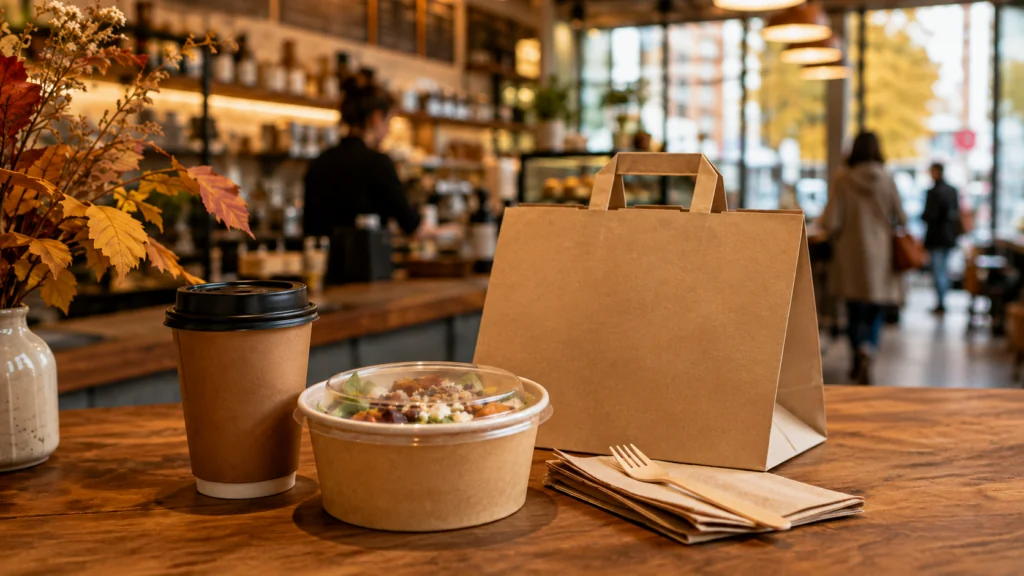
The choice of materials has become a central issue in the food sector. Businesses are no longer looking only for functional packaging: they also value its origin, composition, appearance and how it fits into a more responsible consumption strategy.
In this context, bamboo paper cup is becoming increasingly important as a raw material for manufacturing packaging for food and beverages.
Its plant-based origin, renewability and natural appearance make it a particularly attractive material for cafés, offices, events and takeaway services.
At Monouso, we have incorporated this material into one of our latest projects: a new cup made from bamboo paperboard. Beyond the product itself, this launch offers an opportunity to discover the possibilities of a plant fibre that is becoming increasingly common in the sector.
Bamboo paper cup as a growing packaging trend
Bamboo paper cup is a material made from fibres extracted from bamboo. These fibres are processed to create a pulp that is then used to manufacture paper and paperboard.
The process shares some principles with the production of paper cup from other plant sources: the fibres are separated, treated and transformed until a suitable base is obtained for producing different types of packaging.
The result is a plant-based material that can be adapted to a wide variety of formats and applications.
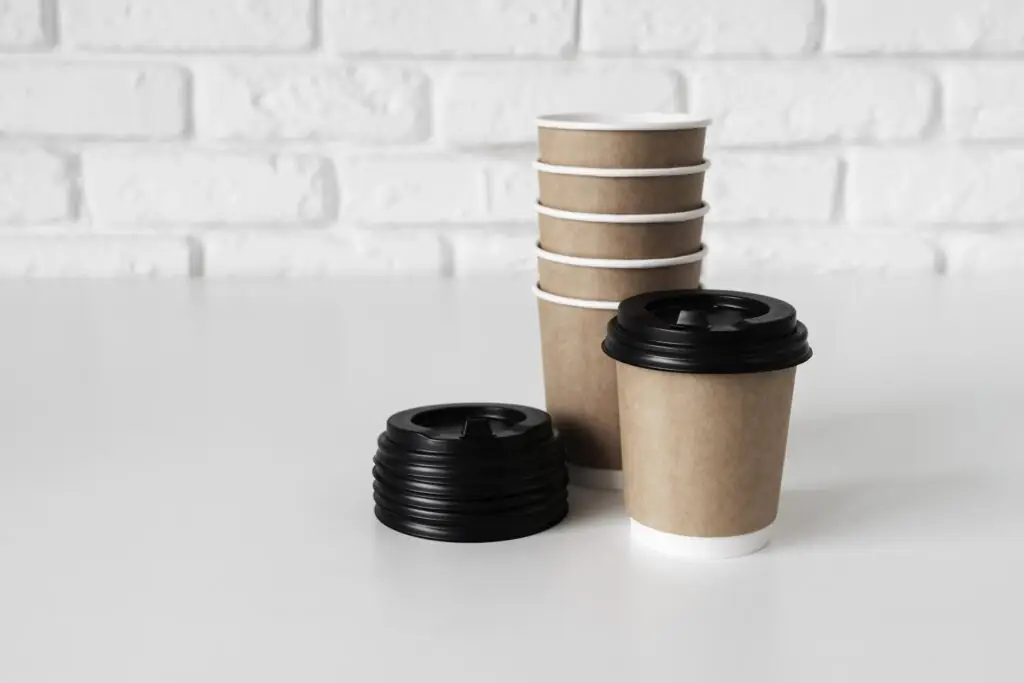
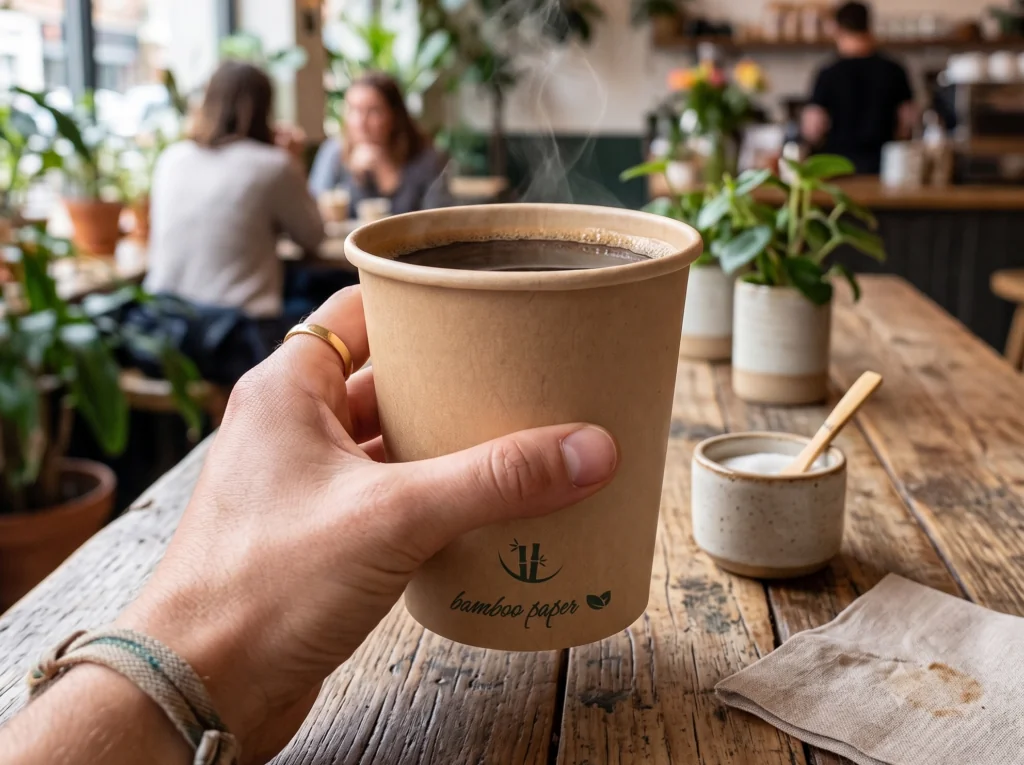
For cups, bamboo paperboard makes it possible to create containers with a natural appearance, a delicate ivory shade and a structure suitable for serving hot drinks.
Bamboo as a renewable resource
One of the main reasons bamboo attracts so much interest is its growth capacity.
Unlike other plant species used to produce fibres, many varieties of bamboo can grow quickly and regenerate after harvesting without the need to completely replant the crop. This renewability makes bamboo a particularly interesting source of fibre for developing new materials.
In addition, its use helps diversify the raw materials employed by the paper and paperboard industry, reducing dependence on a single plant source.
Talking about bamboo does not automatically mean that every product made from this material has a lower environmental impact. To assess its overall performance, other factors must also be considered, such as the origin of the raw material, manufacturing, transport, applied treatments and waste management.
However, its renewable nature explains why it is increasingly being studied and used across different sectors.

A fibre with multiple possibilities
Bamboo stands out because of the structure of its fibres, which can be used to produce lightweight and resistant materials. In the packaging sector, these fibres can be used to manufacture paper and paper cup for a wide range of applications, including:
- Paper cups for hot drinks
- Food boxes and containers
- Paper bags
- Wrappers
- Trays
- Presentation and serving items
This versatility makes it possible to incorporate bamboo into many different solutions while still meeting the specific requirements of each application.
In the case of a cup, for example, the material must provide stability, retain its shape during use and offer a comfortable experience for the consumer.
An appearance inspired by nature
The value of bamboo paper cup is not limited to its plant-based origin. Its appearance also plays an important role. The shades, textures and visual finish typical of this type of paperboard convey a natural, welcoming and contemporary image.
This allows the packaging to fit easily into businesses that want to enhance their presentation and communicate greater care in their choice of materials.
In a café or takeaway service, packaging forms part of the brand’s visual identity.
A cup does more than simply hold a drink: it also accompanies the customer experience, appears in photographs, is carried through the streets and contributes to the overall perception of the establishment. For this reason, the material can become a communication tool.
The importance of knowing the composition
The growing interest in bamboo has led to a wide variety of products appearing on the market.
For several years, containers marketed in Europe as bamboo products were, in reality, mainly made from plastic materials with added plant powders or fibres.
This situation caused confusion among consumers and highlighted the need to provide clear information about the actual composition of products.
The problem was not bamboo as a raw material, but the use of certain plant-based additives, such as bamboo, in plastic compositions intended for food contact, as well as the way some products were marketed.
In addition, some inspections detected migration levels of melamine and formaldehyde above the permitted limits in certain products.
As a result, Europe launched a control campaign to remove these products from the market and prevent the sale of new items that did not comply with regulations.
This precedent shows why it is important to distinguish between:
- Paper Cup made from plant fibres
- Plastic products with added fibres
- Composite materials
- Products with a finish that visually imitates bamboo
Transparency allows professional customers to know exactly what they are buying and to choose the most suitable products for each use.
A new Monouso® in-house development
As part of this evolution in materials, Monouso® has developed a new cup made from bamboo paperboard.
The cup is made from paperboard based on bamboo fibres and includes the food-grade coating required for use with beverages. This type of coating is a standard component in paper cups intended for food contact and helps ensure their functionality while preventing seepage and leaks. In addition, this product complies with the European regulations applicable to materials intended to come into contact with food.
Its addition to the catalogue reflects the growing demand for solutions that combine plant-based materials, professional functionality and a carefully considered presentation.
In-house manufacturing makes it possible to work on the design and material selection from the earliest stages of product development, adapting it to the everyday needs of cafés, offices, events and takeaway businesses.


The future of plant fibres in packaging
The packaging sector is constantly evolving. Research into new fibres, improvements in manufacturing processes and the development of coatings that are easier to manage are expanding the possibilities offered by plant-based materials.
Bamboo forms part of this evolution alongside other raw materials, such as sugarcane bagasse, wheat fibre and different types of cellulose.
There is no single material suitable for every application. Each product must be assessed according to its use, strength, composition and end-of-life management.
However, bamboo paperboard shows that it is possible to continue exploring new ways of producing packaging capable of meeting the current needs of the market.
A raw material with a promising future
Bamboo pape cup combines several characteristics that explain its growing presence on the market: it comes from a renewable source, offers a distinctive appearance and can be used in numerous packaging formats.
Its development reflects a broader trend in the sector: gaining a better understanding of materials, communicating their composition transparently and finding solutions suited to the real needs of businesses.
The new Monouso in-house bamboo paper cup was created in this context as a practical application of a plant fibre with significant potential for food-sector packaging.