Some smells have a way of taking us straight back to childhood. The aroma of freshly baked bread, a Sunday roast slowly cooking in the oven or a chicken turning golden on the rotisserie. In Britain, these familiar scents bring to mind family gatherings, busy kitchens and the anticipation of sitting down together for a proper meal.
Golden, crispy skin, tender and juicy meat, fluffy roast potatoes and a generous helping of gravy. Roast chicken is much more than a convenient meal: it’s a comforting family favourite that has brought generations together around the table, particularly at weekends.
Behind every freshly roasted chicken is also a business that takes pride in its seasoning, cooking times and attention to detail. Because between the moment the chicken comes off the rotisserie and the moment it’s served at home, there’s one important step: choosing the right roast chicken containers to make transportation easier and help preserve the quality of the food.
Roast chicken and the Sunday lunch tradition: a favourite that never goes out of style
From the rotisserie counter to the family dining table
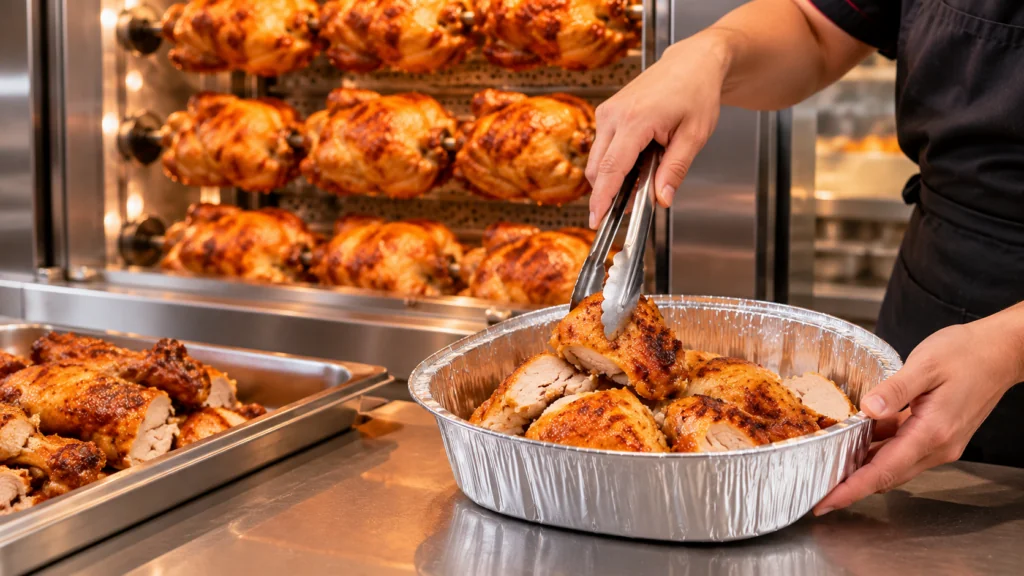
It’s Sunday morning, and thoughts are already turning to lunch. Perhaps someone is preparing a traditional roast at home, or the family has decided to pick up a freshly cooked chicken instead. At the local food counter, golden chickens turn slowly on the rotisserie, while the smell of roasting meat and herbs makes it difficult to walk past without stopping.
For many British families, roast chicken is closely associated with the traditional Sunday roast. Whether it’s prepared at home, served in a pub or bought ready-cooked, it’s a meal that brings people together.
The classic combination is instantly recognisable: tender roast chicken, crispy roast potatoes, carrots, parsnips, seasonal greens and plenty of gravy. Some families add stuffing, Yorkshire puddings or cauliflower cheese, each with their own ideas about what makes the perfect roast dinner.
Alongside the traditional oven-roasted chicken, rotisserie chicken has become a convenient option for anyone who wants a freshly prepared meal without spending hours cooking. Supermarket hot food counters, delicatessens, takeaway shops and specialist chicken businesses offer different ways to enjoy this familiar favourite.
Every kitchen has its own approach. Some use rosemary, thyme, garlic and lemon, while others favour paprika, black pepper or a carefully balanced blend of spices. Whatever the recipe, the aim is the same: to serve delicious chicken that’s easy to take home and share.
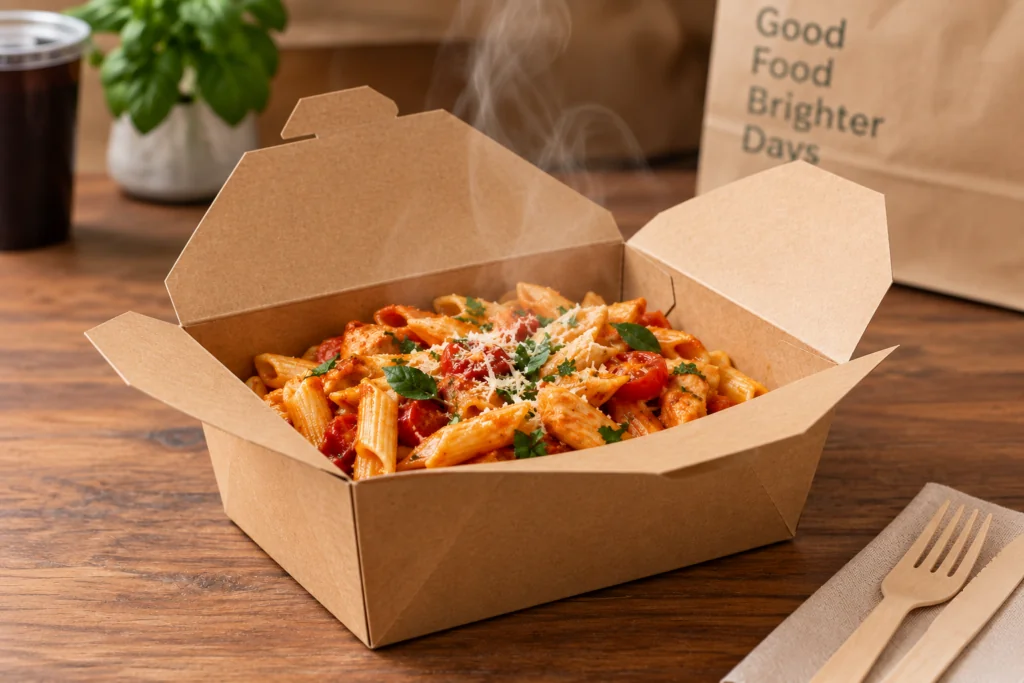
And although the way we shop and eat has changed, the enjoyment remains. Today, customers might order online, arrange a collection or simply stop at the counter. But there’s still something special about opening the roast chicken container at home and smelling that freshly roasted food, ready to be served.
A meal worth sharing, without spending hours in the kitchen
Part of the appeal of roast chicken is its simplicity. It offers a satisfying meal without requiring lengthy preparation at home and works equally well for a family gathering or a quick weekday dinner. A whole chicken can take centre stage at a traditional Sunday lunch, while half a chicken with chips, roast potatoes or a fresh salad makes a practical individual meal.
This versatility has also made roast chicken a popular choice for delicatessens, hot food counters, takeaway businesses, caterers and restaurants offering collection or home delivery.
Yet wherever customers buy their chicken, they expect much the same thing: a meal that arrives in good condition, remains tender and juicy, and doesn’t leave the carrier bag covered in cooking juices.
From the rotisserie to the table: why the right roast chicken packaging matters
Keeping the chicken warm, juicy and appetising
Preparing a good roast chicken takes time, care and experience. Packaging it properly deserves just as much attention. Unlike many other takeaway foods, freshly roasted chicken presents several particular challenges. It’s served hot, releases steam, contains fat and is often accompanied by cooking juices. That’s why roast chicken containers need to meet specific requirements.
A suitable container helps reduce heat loss during the journey, holds the cooking juices and protects the chicken from knocks and movement. It should also provide enough space to prevent the meat from being excessively compressed.
But retaining heat isn’t the only consideration. When hot food is placed inside a completely closed container, steam can condense on the inner surfaces and lid. The resulting moisture can soften the chicken skin, causing it to lose some of its crispness. For this reason, some lids feature small ventilation holes that allow steam to escape more easily.
Choosing the most appropriate packaging depends on the journey time, the type of preparation and whether the priority is retaining warmth or reducing condensation.
Safe and convenient transport for takeaway orders
Imagine a customer collecting two freshly roasted chickens, a generous portion of roast potatoes, some vegetables and several pots of gravy. Everything needs to make it home safely, whether the customer is walking or travelling by car.
At that point, the packaging becomes more than a simple container. It plays an important part in the overall customer experience.
Three factors deserve particular attention: the strength of the material, the fit of the lid and the stability of the container during transport. A container that’s too small may be difficult to close properly, while one that’s much too large can allow the chicken to move around during the journey. It’s also essential to check that the lid is compatible with the chosen container and that the material can withstand the temperature of the food.
Something as straightforward as selecting the right size can make the difference between an order that arrives in excellent condition and one that leaves the customer cleaning gravy or cooking juices out of their shopping bag.




Which roast chicken containers should you choose for your business?
Not every food business operates in the same way. Some rotisserie counters mainly sell whole chickens, while others offer half chickens, individual portions or complete meals with sides. Many takeaway businesses also combine counter service with pre-orders, collection and home delivery.
Before buying rotisserie chicken takeaway packaging, it’s worth considering portion sizes, the amount of cooking liquid, the accompaniments offered and the usual length of the journey.
Aluminium foil trays for roast chicken: a tried-and-tested choice
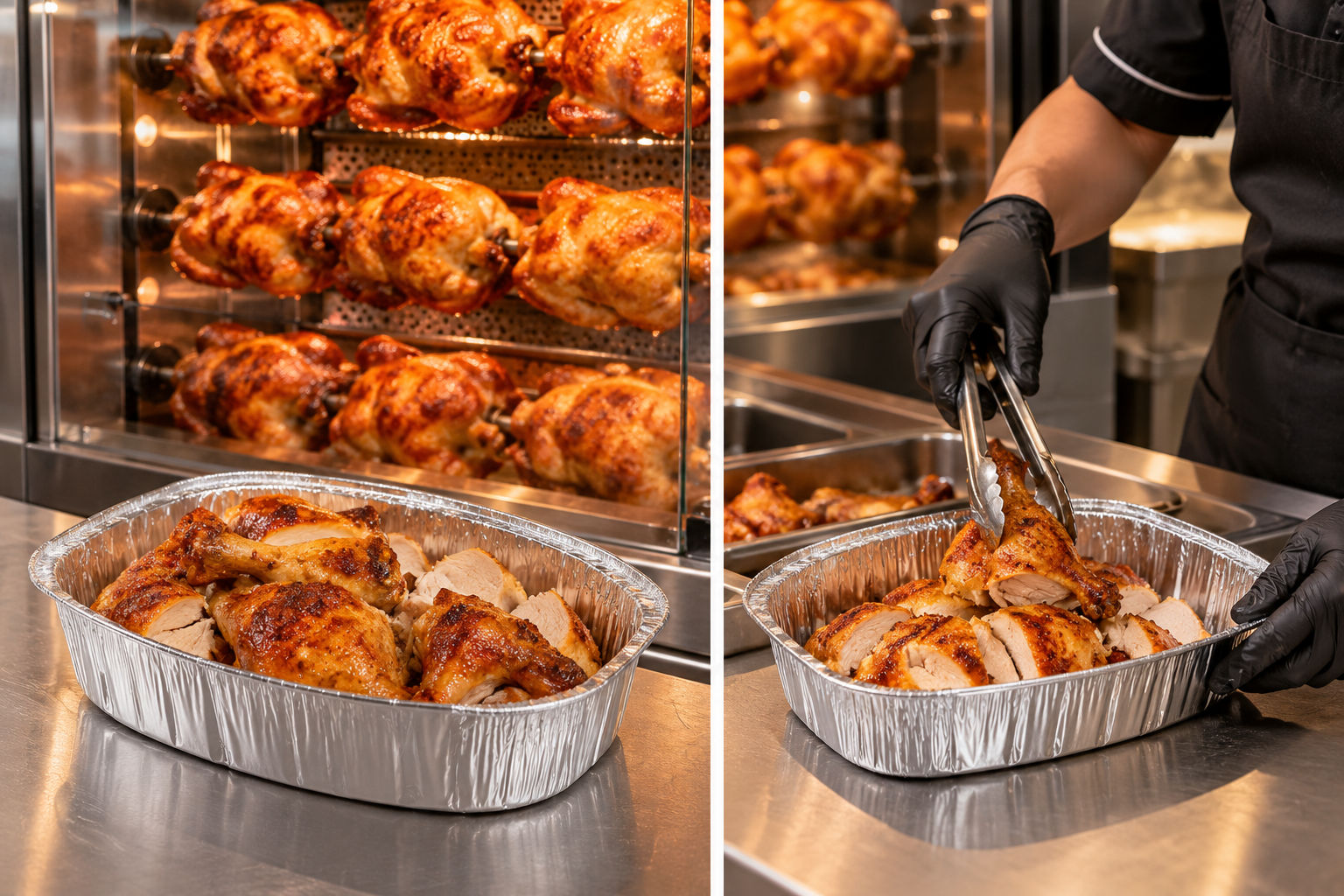
One of the most familiar solutions for packaging hot roast chicken is an aluminium foil tray with a fitted cardboard lid. These foil food containers are widely used by takeaways, caterers, hot food counters and other businesses selling freshly prepared meals. Their main advantages include their lightweight construction, resistance to grease and ability to withstand high temperatures.
They allow chicken to be transported with its cooking juices without the need for a heavy or cumbersome dish.
Another advantage is that certain aluminium trays can be used in a conventional oven, provided the manufacturer confirms their suitability. This means customers can reheat their chicken before serving, making use of the cooking juices collected in the tray.
However, extra care is needed when it comes to microwave use. Aluminium containers should only be placed in a microwave if the manufacturer explicitly confirms that the particular product is suitable for this purpose.
All usage instructions must be followed, and any lids that aren’t microwave-safe must be removed beforehand.
Plastic containers with lids: a practical takeaway solution
Plastic containers for roast chicken offer another option for takeaways, food counters, caterers and restaurants looking to combine convenience, durability and an attractive presentation. Particularly useful options include microwavable deli containers round PP, where this suitability is confirmed by the manufacturer.
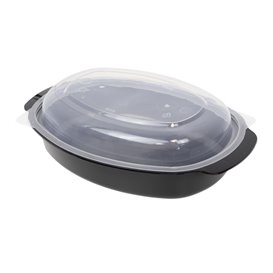
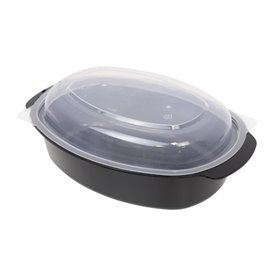
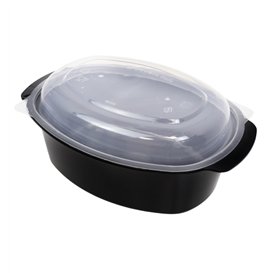
Presentation is another advantage. Containers with a black base and transparent lid allow customers and staff to see the contents without opening the packaging, which is useful for counter displays and collection orders.
Some plastic food containers with lids are suitable for reheating in the microwave, depending on the material and technical product specifications. However, it’s essential to check the manufacturer’s maximum permitted temperature before placing freshly roasted chicken inside.
Not all plastic containers can withstand the same temperatures, and the lid must also be suitable for the intended use.
Packaging for chips, roast potatoes, sides and sauces
Although roast chicken is the star of the meal, it rarely arrives at the table on its own. Crispy roast potatoes, chips, carrots, peas, stuffing, coleslaw, seasonal vegetables and cauliflower cheese are just some of the accompaniments that can complete a chicken meal.
Each one, however, presents different packaging requirements:
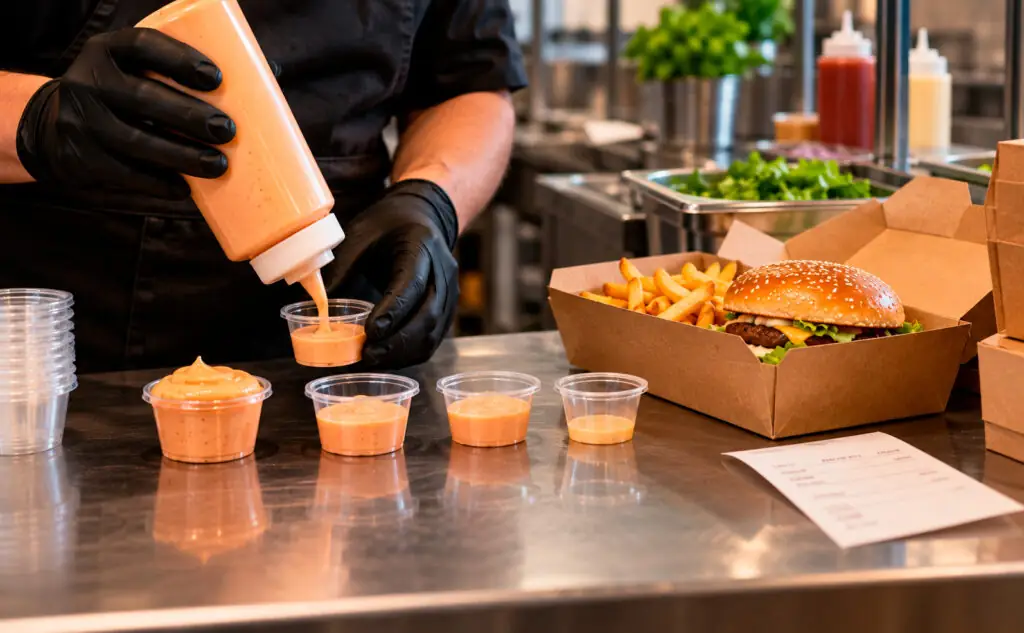
Roast potatoes can sometimes travel alongside the chicken when the container offers enough space and is suitable for both foods. Chips, on the other hand, can lose their crispness if they remain enclosed for too long alongside hot foods that release steam. Using suitable potato chip bags can help maintain their texture during transport. The choice of material and how moisture and steam are managed both play an important role. Coleslaw, salads and other cold sides need containers suitable for chilled foods, with secure closures to help prevent spillages, especially when dressings are included. For gravy and sauces, such as chicken gravy, garlic mayonnaise, barbecue sauce or other condiments, separate sauce pots with well-fitting lids are often the most practical choice.
The material must always be suitable for the temperature of the contents, particularly when packaging hot gravy or cooking juices.
Keeping accompaniments separate doesn’t just make transportation easier: it also helps preserve the individual characteristics of each dish and allows customers to serve everything as they prefer once they get home.
For food businesses, having standard packaging sizes for different meal combinations can also make preparing orders quicker and more organised, particularly during busy lunch and dinner services.
A familiar favourite to enjoy at home, carefully prepared and packaged
Today, customers can order their roast chicken online, collect it on their way home or have a complete meal delivered directly to their door. And although the traditional Sunday roast continues to hold a special place in British food culture, roast chicken is just as welcome on a busy weekday. One thing remains unchanged: the pleasure of sharing a good meal without unnecessary fuss.
Behind that experience are the takeaway owners, caterers, rotisserie operators, delicatessens and other food businesses that continue to take pride in their recipes, cooking methods and customer service. And while the chicken will always be the centre of attention, the work doesn’t end when it comes out of the oven or off the rotisserie. It continues through packaging, collection and delivery, right up to the moment the customer opens the container and serves the meal.
Choosing suitable roast chicken packaging is therefore another way of protecting the food and recognising the care that goes into preparing every order.
Because good food deserves to be looked after, from the rotisserie to the very last bite.