
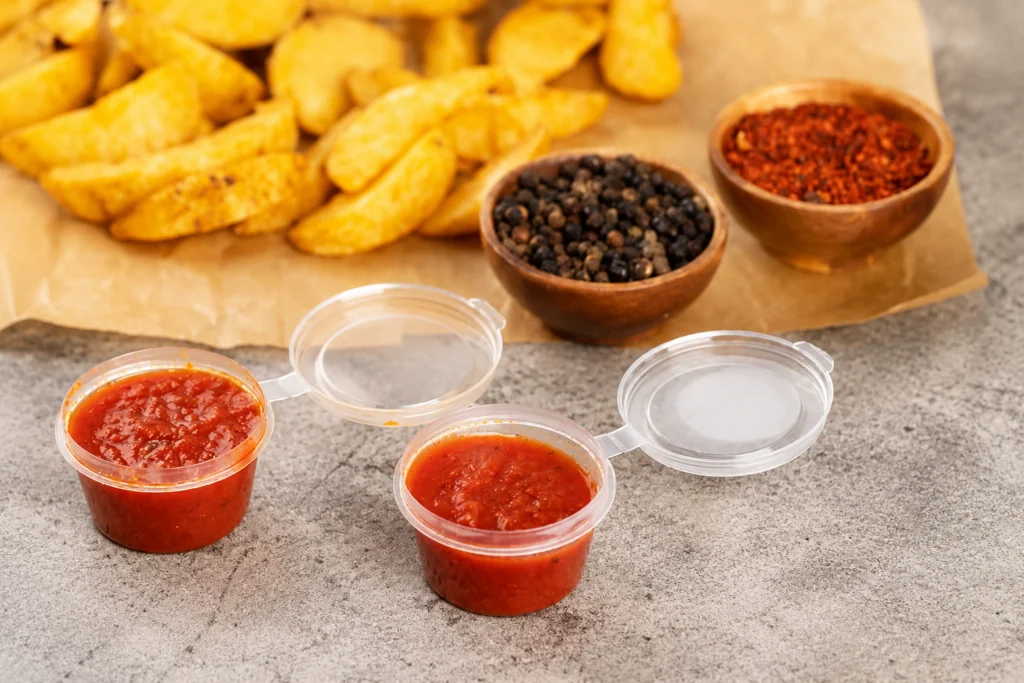
Sauces are the perfect accompaniment to a wide variety of dishes. From ketchup and mayonnaise to aioli, guacamole, vinaigrettes or barbecue sauce, these additions need a container that makes transport easier and preserves their properties until the moment of consumption.
Choosing the right sauce containers helps prevent spills, improves the presentation of the order and offers a more convenient experience for the customer. In addition, having the right container makes it possible to adapt the service to the needs of restaurants, burger bars, food trucks and take away and delivery businesses.
In this guide, you will discover what types of containers are available, which materials are most commonly used and what aspects to consider before choosing the most suitable format.
Why choose sauce containers?
Sauce containers are not only used to transport liquids. They also help keep the product separate from the main dish, allow better portion control and make it easier for customers to add the amount of sauce they prefer.
They are also an essential accessory for take away and home delivery services, where a container with a secure closure prevents spills and protects the rest of the order.
Their versatility makes them a common solution in many businesses, such as burger bars, pizzerias, fast food restaurants, food trucks, catering services and even prepared food establishments.
Aspects to consider before choosing a sauce container
Before choosing a specific model, it is advisable to analyse several aspects that will influence both product preservation and service convenience.
1. Material
The material determines the container’s resistance, appearance and the type of sauce for which it is most suitable.
While plastic containers stand out for their resistance and versatility, alternatives made from cardboard, sugarcane or pleated paper offer different options to adapt to the needs of each business.
2. Capacity
Not all sauces require the same amount. A sauce such as ketchup does not need the same container as a portion of guacamole or a sauce intended for sharing.
Choosing the right capacity avoids wasting space, improves presentation and makes portion control easier.
3. Type of closure
A good closure is especially important in take away and delivery services.
Containers with a separate lid, hinged lid or nozzle offer different advantages depending on the type of sauce and the way it is served.
4. Transparency and presentation
Design also influences the customer experience.
Transparent containers allow the contents to be seen before opening, while white, black or coloured models help maintain a more uniform and carefully presented image.

Types of sauce containers
There is a wide variety of formats designed to adapt to different types of sauce and service methods.
Plastic containers
Plastic containers are one of the most widely used options thanks to their resistance, lightness and ability to transport sauces safely.
They are available in different sizes and formats, making them suitable for both small individual portions and larger quantities.
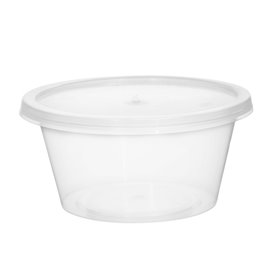
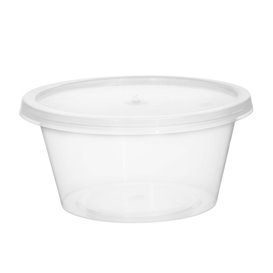
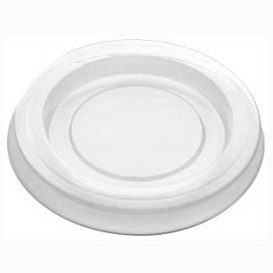
Plastic sauce pots with lids
These are one of the most common solutions for ketchup, mayonnaise, mustard, aioli, barbecue sauce or vinaigrettes.
Their separate lid provides a secure closure that helps prevent spills during transport and allows the sauce to be served individually with the order.
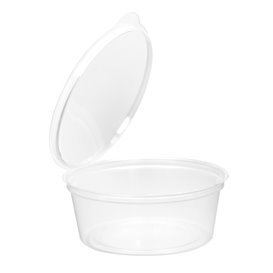
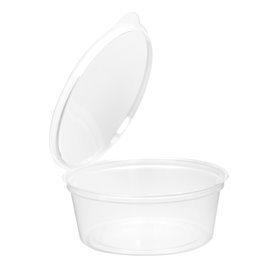
Hinged containers
Containers with a lid attached by a hinge offer quick and convenient opening.
They are especially useful when customers need to open and close the container several times or when looking for a practical solution for sauces and small side dishes.
Bottles with nozzles
Bottles with nozzles are designed to dispense sauce cleanly and precisely.
They are commonly used in professional kitchens to serve ketchup, mayonnaise, mustard, oils, syrups or homemade sauces, making staff work easier and improving dish presentation.



Eco-friendly containers
In addition to plastic containers, there are other alternatives made from plant-based materials or paper that offer different performance features depending on the intended use.
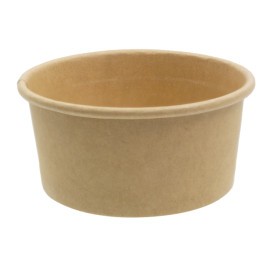
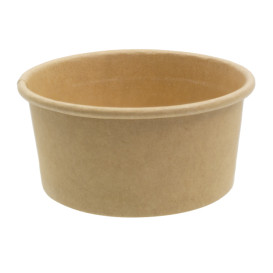
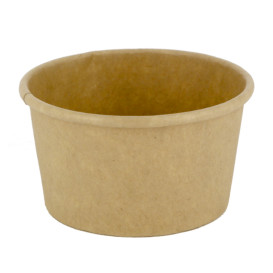
Cardboard sauce pots
Cardboard pots are a widely used option for serving small portions of sauce in restaurants and food-to-go businesses.
Available in different capacities and compatible with lids, they offer a simple presentation and are very practical for take away and delivery.
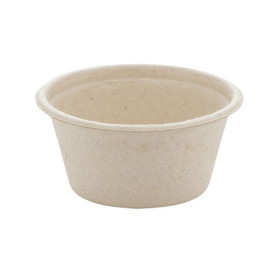
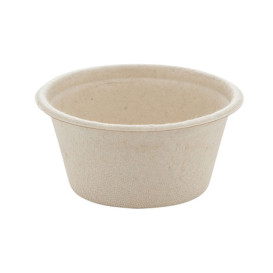
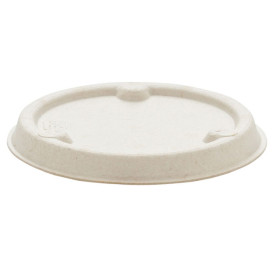
Sugarcane containers
Made from plant fibres, these containers stand out for their rigidity and resistance.
They are a suitable alternative for serving sauces, creams and other accompaniments in businesses looking to expand their range of containers made from plant-based materials.
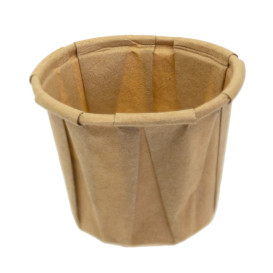
Pleated paper pots
Pleated paper pots are a classic format for small portions of sauce.
Thanks to their compact design, they are very practical for tastings, food trucks, events, catering services and fast food establishments.
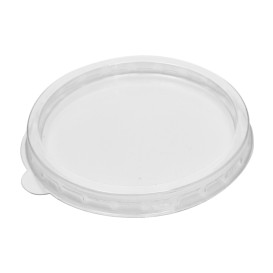

How to choose sauce containers according to use?
The same container is not always suitable for every type of business. Adapting the format to the service helps improve the customer experience and makes daily work easier.
Fast food
In burger bars and fast food restaurants, individual portions of ketchup, mustard, mayonnaise or barbecue sauce are the most common.
Small containers with lids make it easy to serve each sauce conveniently while keeping the rest of the order clean.
Food trucks
In this type of business, it is important to optimise space and speed up service.
Containers that are easy to store and stack help staff work faster during peak times.
Take away
When customers collect their order from the establishment, the container must protect the sauce during the journey and prevent possible spills.
For this reason, it is advisable to choose containers with a secure closure and a capacity adapted to each portion.
Delivery
In home delivery, the resistance of the container becomes even more important.
Choosing containers that close properly and withstand transport helps sauces arrive in good condition without affecting the rest of the food.
Tips for choosing the right sauce containers
| Key aspect | Why is it important? | Recommendation |
|---|---|---|
| 📏 Size does matter | Choosing the right capacity improves presentation and avoids using containers that are larger than necessary. | Match the container volume to the amount of sauce you are going to serve. |
| 🥣 The type of sauce makes a difference | Liquid, creamy or thick sauces need different formats to make use and transport easier. | Choose the container according to the texture and consistency of the sauce. |
| 🚚 Transport also matters | In delivery, a poor closure can cause spills and affect the rest of the order. | Use resistant containers with a secure lid. |
| ✨ Presentation improves the experience | A clean, well-proportioned container adapted to the product conveys a more professional image. | Pay attention to the size, colour and finish of the container. |
How to choose the best sauce containers
Choosing the right sauce containers means assessing the material, capacity, type of closure and intended use.
Plastic containers, cardboard pots, sugarcane containers and pleated paper pots offer solutions for different types of businesses and services.
Analysing the needs of each establishment will make it possible to find the most suitable format to preserve sauces, make transport easier and offer a better customer experience.
At Monouso, you will find a wide variety of sauce containers in different materials, sizes and formats to suit any type of food service business.
Frequently asked questions about sauce containers
When is it advisable to use hinged containers?
Hinged containers are practical when you need quick opening and a lid that remains attached to the container. They are useful in fast food, food trucks and take away services.
Is a transparent or opaque container better?
Transparent containers allow the contents to be seen and make identification easier. White, black or coloured models can enhance presentation and help differentiate sauces or formats.
How can spills be avoided during transport?
Use a container of the right size, check the closure before handing over the order and place the sauces in a stable position inside the transport bag or box.