
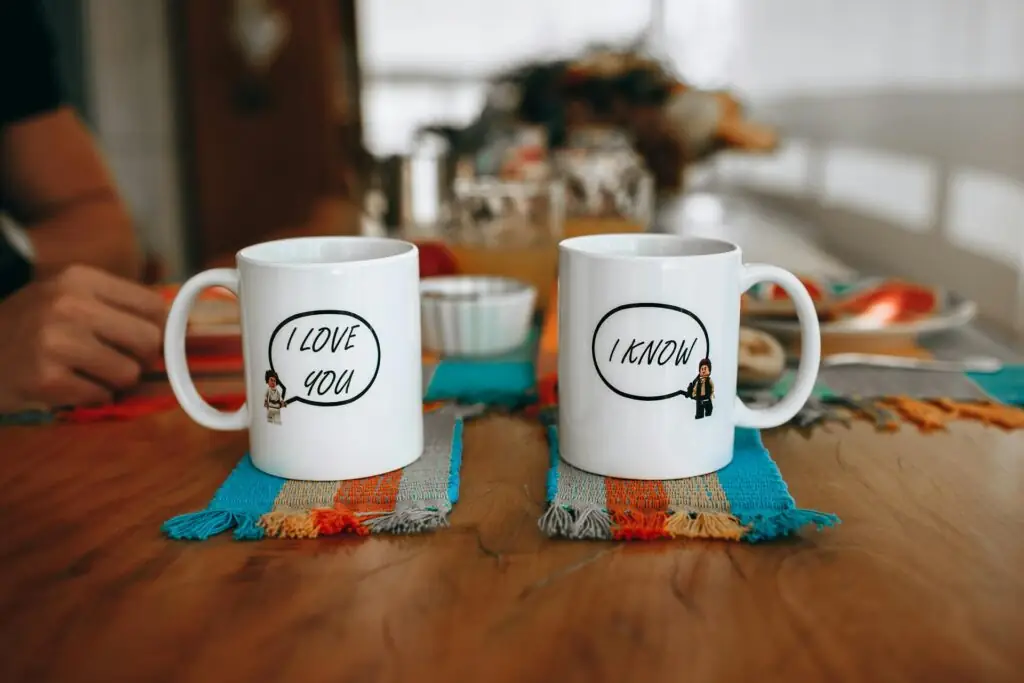
Printing techniques for custom products have diversified over time. This is a great advantage, as we can now choose which types of printing for personalized products offer the best finish depending on the characteristics of each item.
Do you want to know which printing method is best suited for the tableware you want to customize? You’ve come to the right article—we’re going to show you some of the available options and give you some tips to help you choose the best one.
Types of Printing on Custom Products
A custom product must have a flawless printing finish, as its added value largely depends on it. For many years, screen printing and die-cutting dominated the printing market; however, new techniques have emerged that offer a wide variety of results. Let’s take a closer look at each one!
Pad Printing
Pad printing is a marking system that works through the transfer of ink using a silicone pad. It is the best option for printing pieces with rough or curved surfaces, as it adapts very well to these characteristics. Some of the benefits of pad printing include:
- Impeccably defined finishes on almost any type of material and surface.
- The ability to print in all kinds of colors and on small-sized products.
- A fast, clean, and low-cost process compared to other techniques.
Thanks to the durability of its results, pad printing is ideal for printing mugs, plates, bowls, and other everyday items. It is also widely used on glasses, computer accessories, toys, pens, office supplies, and more.
Screen Printing
Another of the most common printing techniques for personalized products is screen printing. This method consists of applying ink to different materials using a stretched mesh screen. The screen contains the desired design and allows ink to pass only through the unsealed areas. Some of the benefits of screen printing include:
- Great durability, as it withstands wear very well—even on frequently used items. Screen-printed designs can resist high temperatures and exposure to chemicals without issues.
- Compatibility with various materials, such as metals, plastics, textiles, and ceramics.
- Sharp details and vibrant colors.
Screen printing also allows for the use of multiple types of ink, including opaque, metallic, and fluorescent inks, making it a preferred technique when experimenting with unconventional designs.
Laser Marking
This printing technique is perfect for marking materials on which ink application is difficult, such as leather, wood, glass, or metal.
The process is simple: a laser beam is projected from a computer onto the product’s surface. The design is marked in low relief; however, it is important to note that laser marking is generally not suitable for designs larger than 8 cm. Aside from this, it offers the following advantages:
- Crisp finishes even for highly complex designs.
- Extremely precise results, with a nearly nonexistent margin of error. It is also very quiet.
We should also highlight its speed! Laser marking can produce large volumes of personalized products in a short time and with very little noise.
Varnishing
This technique helps protect prints from scratches, stains, and wear caused by daily use. Varnishing is widely used on personalized tableware and containers, as it enhances the finish of designs and gives them an elegant touch.
There are also several types of varnishes, and the choice depends on the desired result. Let’s see the options:
- Matte varnish: Used when designs are so bright that readability decreases. This varnish corrects that issue.
- Gloss varnish: Improves light reflection on products and enhances the clarity of the designs.
- Pearlescent varnish: Provides luxurious effects and finishes. Ideal for achieving satin or pearly looks.
Additionally, there is UV varnish, which is used when highlighting a specific image. It is called this because UV rays are required for curing.

How to Choose the Right Printing Method
Not all techniques are suitable for all products. Some offer better performance than others, so taking the time to choose the right one is essential to achieving the best results. Below are some tips to guide your decision.
The Material of the Product
The type of material is the first thing you should consider when selecting a printing method. For example, screen printing works very well on materials such as rubber, wood, plastics, paper, and a wide variety of textiles. However, it is not recommended for printing on acetate, rayon, or acrylic.
Quantity of Units
The printing cost for personalized products can be high if the correct technique is not selected. Laser printing, for example, is one of the most efficient methods thanks to its speed and low production cost.
Design
When printing highly complex designs with plenty of detail, it is necessary to choose more advanced techniques. Laser printing and pad printing offer highly precise finishes and excellent color results. Varnishing can also be used when certain details in the design need to be highlighted or subdued.
Budget
Printing custom products can be expensive if the most appropriate technique is not chosen. You must consider the number of units you want to produce, as this will guide your decision. However, both pad printing and screen printing are usually the lowest-cost techniques compared to the rest.
Benefits of custom products
Customizing products with your brand’s logo or slogan is one of the most widely used strategies by millions of companies worldwide. Beyond simply spreading this information among users, product customization offers additional benefits such as:
- Customers and users feel more valued and acknowledged. This helps strengthen their sense of loyalty toward your brand.
- It reinforces the perception that the product has added value, making customers more willing to pay a higher price.
- Your brand will stand out from the competition and become more recognizable among the multitude of products on the market.
Additionally, it is undeniable that custom products are usually much more appealing. For this reason, the likelihood that customers will want to purchase them—and even recommend them—increases significantly.
We hope we’ve helped answer your questions and that you now know which printing technology for custom products to choose. We’ll see you in the next post, and we wish you happy holidays! 🎄✨